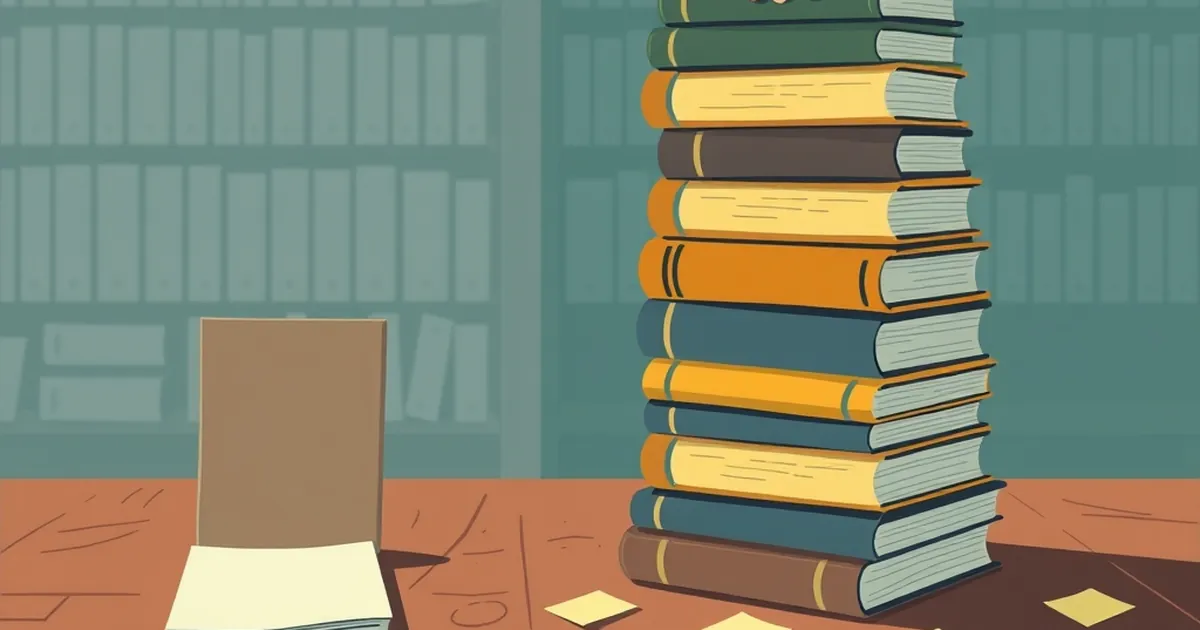
Every bookseller has watched it happen: a customer walks in knowing exactly what they want, picks up one paperback, and heads to the register in under three minutes. The same customer, confronted with a "buy 2, get 1 free" table, stands frozen for ten minutes, picks up four books, puts two back, and leaves with nothing. The bundle was supposed to make the decision easier. Instead, it doubled the cognitive load.
Why Bundles Tax the Decision System More Than Single Titles
The mechanism is straightforward once you frame it in terms of choice architecture. A single-title purchase asks one question: do I want this book? A three-book bundle asks at least four: do I want this book, do I want that one, do I want the third, and do I want them together more than I want the money? Each additional item multiplies the comparison set rather than adding to it linearly.
Behavioral economists call this the "choice overload" problem. Sheena Iyengar and Mark Lepper's famous 2000 jam study — 24 varieties versus 6 — found that the smaller display converted to purchase at roughly ten times the rate of the larger one, even though the larger display attracted more browsing. The shoppers weren't lazy. They were doing more work per decision, and the work had a cost.
Variable Rewards and the Bundle's Hidden Hook
There's a second layer that gets less attention: bundles introduce uncertainty into the reward. A single book is a known quantity — you've read the blurb, you know the author, you know what you're getting. A bundle is a small portfolio. One book will land, one will be fine, one might sit unread for two years. That asymmetry is where loss aversion enters, per Kahneman and Tversky's foundational work: the anticipated regret of "wasting" one title in a three-pack weighs more heavily than the pleasure of the two good ones.
Publishers have quietly learned this. Subscription boxes that ship one curated title per month consistently report higher retention than boxes shipping three. The single-title model preserves the variable-ratio reward — you might get something great — without the drag of forced comparison.
The Bookseller's Countermove
Here's the practical implication, and it's the part most shops get wrong. Bundles work when the selection is done for the buyer, not by the buyer. A staff-curated "Three Novels That Will Ruin Your Weekend" display with a single price removes the comparison step entirely. The customer isn't choosing between books; they're accepting or rejecting one pre-assembled decision. That's a single-title decision wearing a bundle's clothes, and it converts.
The evidence is visible in how indie shops have restructured their front tables over the past five years. The successful ones don't stack three titles and hope. They write a card explaining why those three belong together, price them as one unit, and let the customer say yes or no. Decision fatigue drops because the cognitive work moved from the customer to the bookseller — which is, arguably, what a good bookshop was always for.
Where This Goes Next
Expect the next generation of book retail to lean harder into pre-assembled bundles and harder away from "pick any three" promotions. The data on choice overload is too consistent to ignore, and the customers who abandon carts at the bundle table aren't indecisive — they're overloaded. The shops that win the next decade will be the ones that treat bundling as an editorial act, not a pricing gimmick. Curate the three. Sign the card. Let the reader do the one thing they actually came in to do: decide whether to trust you.