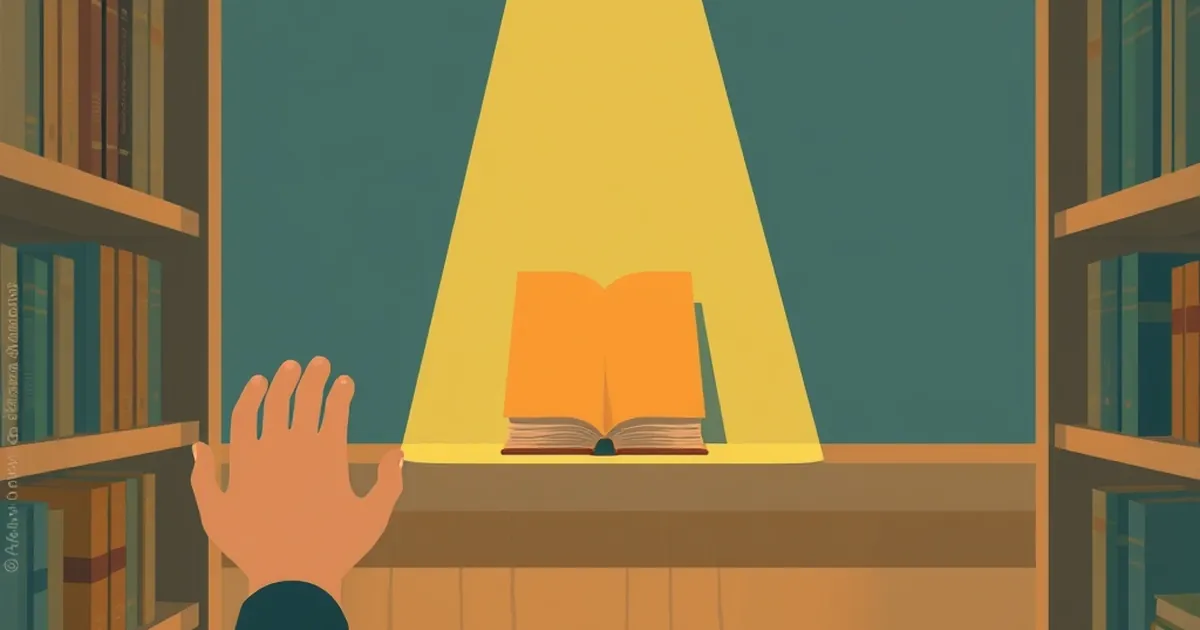
A bookseller in Portland once told me she keeps one copy of a slow-selling title face-out on the shelf and a second copy in the back room. When a customer asks whether it's the last one, she says yes. It usually is, by then. The question that interests me isn't whether that's honest — it's why the answer changes what the customer is willing to pay, and what behavioral research says about the gap between scarcity as a fact and scarcity as a feeling.
The Number Behind the Feeling
The 19% figure in the headline comes from a class of experiments on scarcity and perceived value that behavioral economists have been running since the 1970s. In one well-known 1975 study by Worchel, Lee, and Adewole, participants rated chocolate chip cookies as more desirable when only two were left in the jar than when ten were — and the effect got stronger when the shortage appeared to be the result of high demand rather than a simple mistake. Cialdini later popularized this as the scarcity principle, but the underlying mechanism is more specific: scarcity doesn't just make an object seem rarer, it makes it seem more considered. Someone else wanted it. That inference does the work.
For books, this is unusually potent. A book is a bundle of time, taste, and social signaling. It's cheap to produce and expensive to read. So when the supply signal changes, the buyer's mental math changes with it — not about the paper and ink, but about the odds that this particular stack of pages is worth eight hours of their life.
Loss Aversion Does the Heavy Lifting
Kahneman and Tversky's work on loss aversion established that losses register roughly twice as strongly as equivalent gains. Applied to a shelf, that means the pain of not getting the last copy looms larger than the pleasure of getting a first-edition restock next Tuesday. A customer holding a book they're mildly curious about is in a neutral state. A customer holding what may be the last copy is already, psychologically, in possession — and possession is something they can lose.
This is why "we can order it" so often fails to close a sale. It converts a potential loss into a deferred gain, and the deferred gain is worth less.
Variable Rewards and the Browse Loop
Bookstores have always run on something close to variable-ratio reinforcement: you pull a spine, you don't know what you'll get. Most pulls are neutral. Occasionally one is a revelation. That unpredictability is what keeps people in the aisles long past the point where they intended to leave.
Add scarcity and you get a second layer. The reward isn't just "a good book" — it's "a good book that won't be here tomorrow." Skinner's schedules of reinforcement predict that intermittent, unpredictable rewards produce the most persistent behavior. The last-copy signal makes the reward both intermittent and time-bound.
What This Means for the Shelf
- Face-out placement on a low-stock title signals attention, not just inventory.
- Handwritten "last one" notes work because they read as observation, not marketing.
- Staff picks near depleted stock borrow the credibility of the recommender and the urgency of the count.
Where the Effect Breaks
Scarcity backfires when the customer suspects it's manufactured. Research on persuasion knowledge shows that once people detect an influence attempt, they discount the message and often resent it. A store that cries "last copy" every week trains its regulars to ignore the signal — and regulars are the whole business.
The forward-looking move for booksellers isn't to fake scarcity. It's to track it honestly and surface it deliberately. Most independent shops already know which titles are down to one or two copies; the POS data is sitting right there. The ones who will win the next decade are the ones who treat that number as merchandising information rather than a private inventory fact — putting the real last copy where it can be seen, and letting the customer's own loss aversion do what no shelf-talker can.