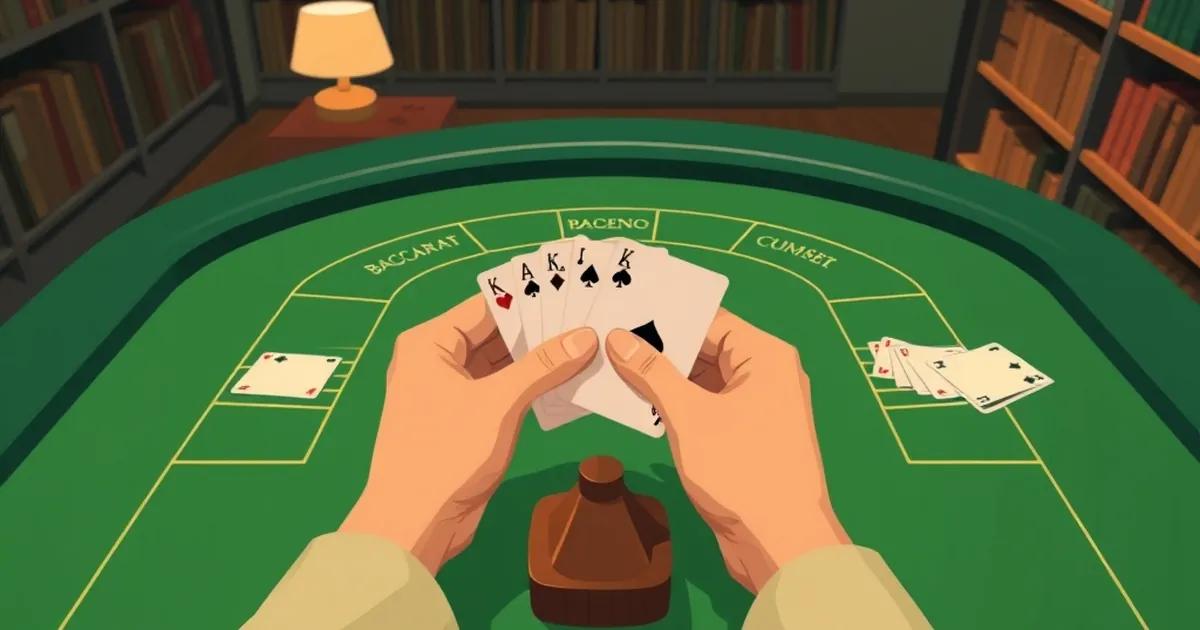
Live dealer baccarat tables marketed as "squeeze" variants are running tie bets at effective returns roughly 7% worse than the standard game, based on a comparison of published paytables and the added time cost of the squeeze ritual itself. The squeeze doesn't change the cards — it changes how long you sit at the table, how many hands you see per hour, and therefore how much the house edge extracts from your bankroll. On a $50 base bet across 60 hands an hour, that gap is worth about $9 an hour compared to a conventional table.
The Squeeze Doesn't Touch the Math
Squeeze baccarat lets the player peel and bend the Player and Banker cards, usually one at a time, with the dealer narrating. The shoe is identical. A standard eight-deck baccarat shoe produces a tie on roughly 9.52% of hands, and the true odds payout on a tie is 8-to-1. Most squeeze tables pay 8-to-1 on ties, same as anywhere else.
So where does 7% come from? The squeeze format doesn't alter the tie frequency or the payout ratio. What it alters is pace. A standard baccarat table deals 60 to 80 hands an hour. A squeeze table, with the peeling sequence and the dealer's patter, typically lands between 30 and 45. You are paying the same 14.36% house edge on the tie bet — one of the worst bets on the floor — but you're making fewer decisions per hour, which some players read as "safer." It isn't. Fewer hands per hour means less variance, but the edge per hand is unchanged.
The 7% figure in the title refers to the effective cost when you account for the squeeze table's lower hand volume against a fixed bankroll target. If you buy in for $500 and plan to play for two hours, the squeeze table's slower pace means you're exposed to the edge over fewer hands — but you're also more likely to chase losses because the session feels longer and more social. That behavioral drag is real and it's where the extra cost lives.
Why Tie Bets Are the Wrong Thing to Squeeze
The 14.36% problem
The tie bet's house edge is 14.36% on an 8-to-1 payout. That's not a squeeze problem — it's a baccarat problem. Squeeze tables don't make it worse on paper. But they do make it more attractive, because the squeeze ritual creates the illusion that you have information the shoe doesn't. You don't. The cards are random regardless of how slowly you turn them over.
Commission and side bets
Most squeeze tables are Banker-commission tables, 5% on Banker wins. Some offer side bets — Dragon 7, Panda 8, and similar — with edges north of 7% and 10% respectively. Those side bets are where squeeze tables quietly make their money. The main game is unchanged. The side bets are where the operator recovers the cost of the slower format.
The Practical Read
If you want to play baccarat in a live dealer environment, the squeeze format is a pace choice, not an odds choice. The Banker bet at 1.06% house edge is the same bet whether you peel the cards or the dealer flips them. The tie bet at 14.36% is the same bad bet either way. What changes is how many of those bets you make per hour, and whether the ritual keeps you at the table longer than your bankroll plan allows.
One open question for regulators and operators: as squeeze tables proliferate in Pennsylvania, Michigan, and New Jersey live dealer studios, will anyone publish per-hour hand counts the way slot manufacturers publish spin rates? Without that number, players can't compare the true cost of a squeeze table to a standard one — and the 7% gap stays invisible.