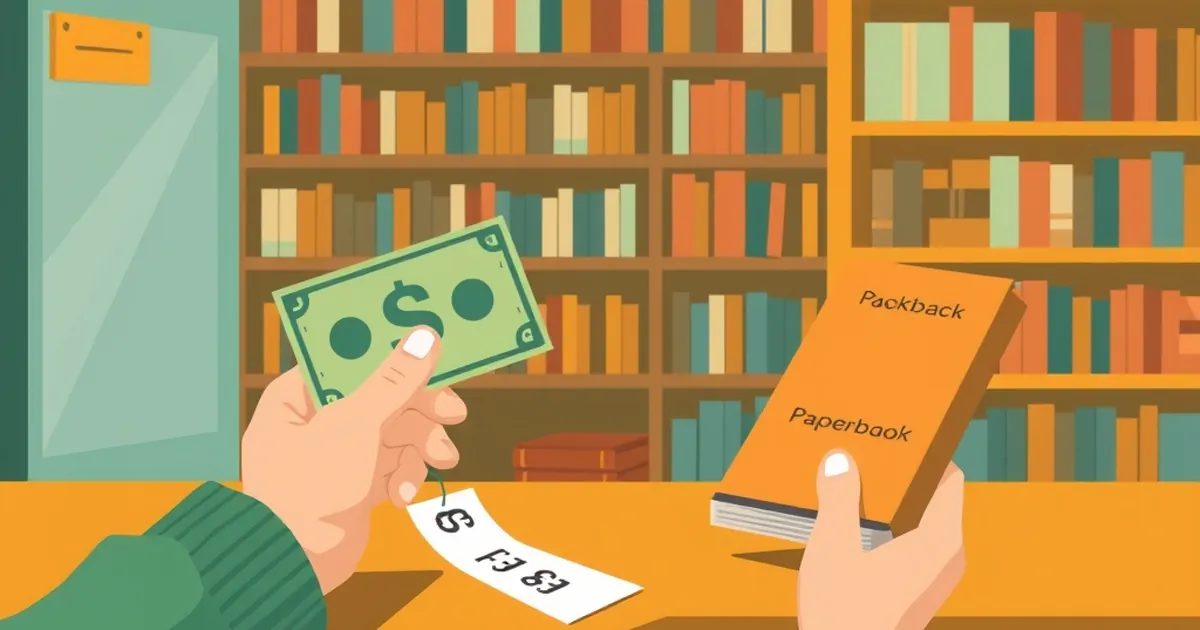
Why will a reader happily hand over $18 for a paperback but bristle at an $18 book that arrives with a $2 "processing fee"? The total is identical, yet the second version feels like a small insult. That gap between mathematically equal outcomes is one of the most reliable quirks in consumer psychology, and independent bookshops have been quietly exploiting it — sometimes accidentally, sometimes brilliantly — for years.
The Fee That Costs More Than It Earns
Behavioral economists have documented this asymmetry since Kahneman and Tversky's prospect theory work in the late 1970s: losses loom roughly twice as large as equivalent gains. Losing $2 stings about as much as gaining $4 feels good. That ratio shows up everywhere in retail, but it's unusually visible in bookselling because the margins are thin and the price points are low. A $2 fee isn't a rounding error on a $400 purchase; it's a meaningful percentage of a $16 trade paperback.
Consider the well-known experiment involving a beer bought from a fancy resort versus a run-down grocery store. Participants were willing to pay significantly more when the seller was upscale, but the introduction of any separate surcharge — a delivery fee, a service charge — collapsed their willingness to pay below the bundled price. The item didn't change. The framing did.
Why Book Buyers Are Unusually Sensitive
Book customers are not typical retail customers. They comparison-shop across a handful of sites, they know list prices, and they often have a relationship with the store. That combination makes them more fee-averse, not less.
The transparency trap
Online checkout pages that tack on "shipping and handling" after the customer has committed to a cart trigger what researchers call the pain of paying — the moment when the abstract pleasure of a purchase collides with a concrete cost. Books are emotional purchases. The fee interrupts the emotion.
The subscription reframe
Several independent shops have tested a different structure: a flat monthly membership that bundles a book, free shipping, and a small discount. Members report higher satisfaction than non-members buying the same books at the same effective price. The fee didn't disappear — it was absorbed into a benefit.
What Variable Rewards Teach Bookstores
Variable-ratio reinforcement, the schedule that makes slot machines and social media feeds so sticky, has a gentler cousin in retail: the surprise. A bookstore that occasionally slips an extra ARC into a shipment, or upgrades a paperback to a signed copy without warning, creates a reward loop that costs almost nothing and produces outsized loyalty. The key is unpredictability. A guaranteed free bookmark is a feature; an unexpected one is a gift.
Where This Points Next
The practical move for shops isn't to hide fees — regulators and customers both punish that — but to stop pricing in a way that makes the fee legible as a separate loss. Bundle shipping into the sticker price and advertise "free shipping" honestly. Offer a membership that converts a recurring cost into a recurring identity. And treat small, unannounced extras as the marketing budget they effectively are.
The $4-versus-$2 asymmetry isn't a trick to be exploited. It's a signal about how readers actually experience a transaction: as a story with a beginning, a middle, and an emotional ending, not a spreadsheet. Stores that write that story well will keep the customer. Stores that hand them a receipt with a surprise line item will keep the $2 and lose the reader.