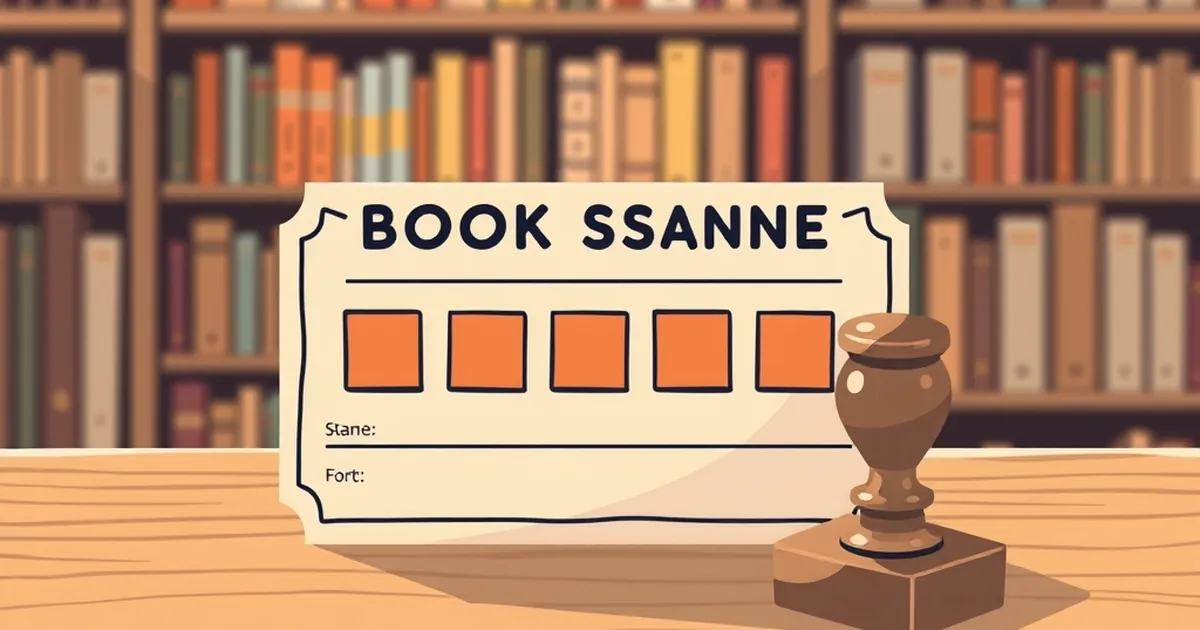
The fifth stamp on a bookstore loyalty card is a strange object. Four punches in, the card is nearly currency—close enough to a free paperback that you can feel it—and then a clerk tells you the promotion changed, the card expired, or the shop switched systems and the old stamps don't count. What happens next, in the customer's head, is one of the more instructive small dramas in retail psychology. It's also a case study in something bookshops share with any pursuit where people take repeated risks for delayed rewards: the mechanics of a streak, and what a reset does to the willingness to keep playing.
The Card Is a Commitment Device, Not a Discount
A loyalty card with five slots is doing more than offering a paperback at a 20 percent effective discount. It's borrowing a well-documented quirk of how people evaluate sequences. Kahneman and Tversky's prospect theory describes loss aversion: losses loom larger than equivalent gains. Once four stamps exist, the customer doesn't hold "four-fifths of a reward"—they hold something they are about to lose. The card converts a future purchase into an owned asset, and owned assets are defended.
Behavioral research on goal gradients (Clark Hull's work, later refined by Kivetz, Urminsky, and Zheng in their 2006 study of customer retention) found that effort accelerates as people approach a reward. In one well-known coffee-card experiment, customers given a card requiring twelve stamps but credited with two free ones—making the real requirement ten—completed it faster than customers handed a plain ten-stamp card. The illusion of progress mattered. So does its removal.
What a Reset Actually Costs
When a streak resets, three things happen at once, and only one of them is about the free book.
The sunk-cost ledger reopens. The stamps were paid for in visits, and the customer now has to write them off. Research on the sunk cost fallacy shows people dislike abandoning investments even when continuing is irrational—but the reverse is also true: once an investment is forcibly voided, the reason to keep visiting evaporates with it.
The reinforcement schedule breaks. Loyalty programs run on fixed-ratio reinforcement: a predictable number of visits earns a predictable reward. That's the most durable schedule there is, which is why bookshops use it. A reset doesn't just delay the reward; it makes the schedule unpredictable, and unpredictability is the signature of variable-ratio reinforcement—powerful for driving behavior, corrosive for trust when it arrives unannounced.
The story changes. Regulars at a bookshop aren't only buying books; they're maintaining a self-image as the kind of person who has a standing relationship with a place. A reset recasts that identity as a bad bet.
The Fifth-Stamp Problem in the Wild
Consider the independent shop that migrates from paper cards to a point-of-sale system and can't import the old stamps. The rational customer should shrug: the book was never the point. But the shop has just demonstrated that its rules are contingent, and the customer's mental model of the relationship—reliable, reciprocal—takes the hit. The dollar value is trivial; the signal is not. This is the same asymmetry that makes a small, unexpected fee feel worse than a slightly higher price from the start.
Designing for the Reset You'll Eventually Have
Resets are inevitable. Systems change, promotions end, owners retire. What's controllable is whether the reset is framed as a loss or as a continuation.
- Carry stamps forward, even partially. Honoring old progress at half value costs almost nothing and preserves the goal gradient.
- Announce the change before it bites. Predictability is the whole asset; a warning converts a violation into a transition.
- Give the streak a second dimension. A reading club, a signed-first-edition list, a monthly recommendation letter—any of these gives the relationship value that doesn't live on a single card.
- Make the fifth stamp feel close again, fast. A small immediate credit after a reset restarts the approach curve before the disappointment sets in.
The forward-looking question for any shop running a streak-based program is not how to avoid the reset but what the customer owns when the card is gone. If the answer is "nothing," the fifth stamp was never the real asset—the habit was, and habits are cheaper to keep than to rebuild.